

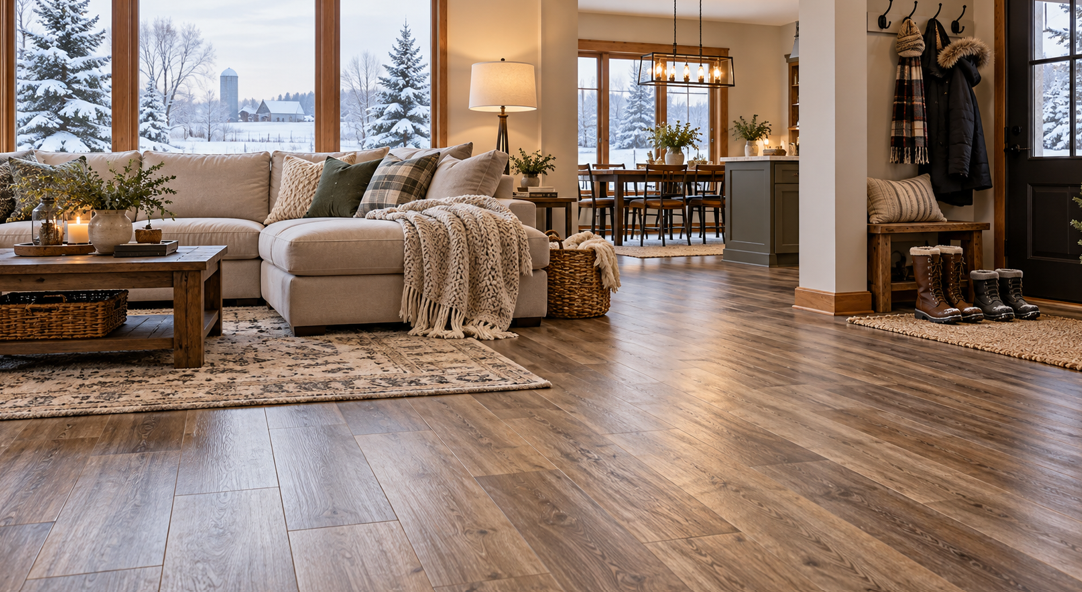
Nebraska winters have a way of testing every part of a home. One day may bring dry, biting cold, while the next brings snow, slush, and muddy conditions around the entryway. Once everyone starts coming indoors with wet boots, road salt, and grit, your floors can end up dealing with a lot more than normal daily foot traffic.
That doesn't mean laminate flooring is a poor choice for winter. Far from it. Quality laminate can be a beautiful, durable, and practical flooring option for Nebraska homes. The key is preparing your home before winter arrives and developing a few simple habits that protect the floor throughout the colder months.
From stopping snow at the door to managing dry indoor air, a thoughtful winter routine can help keep laminate looking polished and performing well throughout the season.
With more than 30 years of flooring experience, Carpet Pros helps homeowners across the Kearney area choose flooring that fits real Nebraska homes, lifestyles, and seasonal conditions.
Why Nebraska Winters Deserve Extra Attention Around Laminate Floors
Winter creates a unique combination of conditions inside Nebraska homes. Snow and slush are often the obvious concerns, but they aren't the only factors worth thinking about.
Someone walks through the front door with snow packed into the tread of their boots. A child comes home from school with wet shoes. The dog runs inside after crossing a muddy yard. A family member enters through the garage carrying road salt and tiny pieces of grit underfoot. Once that material reaches the floor, it can spread surprisingly far.
Moisture is one consideration, but abrasive debris can also affect the appearance of flooring over time. Small particles of sand, salt, and dirt can get trapped under shoes, furniture legs, or rugs and repeatedly rub against the surface.
Nebraska homes also experience a major change in indoor conditions during winter. Heating systems run regularly, doors open to freezing outdoor air, and rooms can become noticeably drier than they were during warmer months.
The good news is that winter floor care doesn't require an elaborate routine.
Most of the work comes down to three ideas:
Keep snow, moisture, and grit from travelling through the home.
Clean winter messes promptly using appropriate methods.
Maintain reasonably consistent indoor conditions.
Preparing before the first major snowfall makes these habits much easier to maintain.
Stop Snow, Slush, Salt, and Grit Before They Reach the Floor
One of the simplest ways to protect laminate during a Nebraska winter is to stop outdoor mess before it spreads across the room.
Think of your entryway as the first line of defence.
Create a Dedicated Winter Entry Zone
Choose the entrance your household uses most often and create a clear place for winter gear.
That might include:
A boot tray for snowy footwear.
Hooks or storage for wet coats.
A mat large enough for several footsteps.
A towel for wiping pet paws.
A basket for gloves, hats, and scarves.
The idea is simple: give people somewhere convenient to deal with snow and moisture before walking farther into the home.
If boots regularly end up beside the sofa or children walk halfway through the house before removing their shoes, winter moisture has much more opportunity to spread.
Use Mats on Both Sides of Busy Doors
A good outdoor mat can remove larger chunks of snow, dirt, and grit before someone enters the home. An absorbent indoor mat then helps capture remaining moisture.
Look for mats that stay securely in place and are large enough that people naturally take several steps across them.
The mats themselves also need attention. A mat packed with grit or soaked with melted snow can't do its job effectively.
Shake, vacuum, or clean them regularly throughout winter, particularly after snowy or muddy days.
Don't Ignore Road Salt and Sand
Nebraska roads, driveways, and sidewalks can expose footwear to salt, sand, and other winter debris.
Those tiny particles may not look particularly harmful, but they can act like abrasives when repeatedly walked across flooring.
Regularly sweeping or vacuuming entryways helps remove debris before it spreads. During periods of heavy snow, these high-traffic zones may need more frequent attention than the rest of the home.
Keep Melting Snow and Standing Moisture Under Control
Winter moisture rarely arrives as one dramatic puddle.
More often, it appears as dozens of small wet footprints, damp patches underneath boots, droplets from coats, and snow melting beside an entry door.
Taking care of these small messes quickly can make a meaningful difference.
Wipe Up Wet Footprints Promptly
If snow or slush reaches laminate flooring, wipe it up rather than leaving it to evaporate naturally.
Pay particular attention to moisture near plank edges and seams.
Common sources include:
Snow-covered boots.
Wet umbrellas.
Children's outdoor clothing.
Pet paws.
Bags placed on snowy ground.
Melting snow around doorways.
Keeping a small absorbent towel near your main entrance can make quick cleanup much easier.
Watch the Areas Most Likely to Get Wet
Not every part of the house faces the same level of winter exposure.
Higher-risk areas commonly include:
Front and back entrances.
Garage-to-house entryways.
Mudrooms.
Hallways connected to exterior doors.
Areas where children remove winter gear.
Spaces where pets enter after being outside.
These spots deserve more frequent checks during snowy weather.
Avoid Over-Wetting During Cleaning
More water doesn't necessarily mean a cleaner floor.
When caring for laminate, follow the cleaning recommendations provided for the specific flooring product. A lightly damp approach may be appropriate for many floors, while excessive water can create unnecessary exposure to moisture.
It is also worth choosing cleaning products carefully.
Harsh chemicals or products that leave a heavy residue may affect the appearance of the floor. If you're unsure, checking the manufacturer's care instructions is a better approach than experimenting with whatever cleaner happens to be available.
Prepare Laminate Flooring for Nebraska's Dry Indoor Heating Season
Snow brings moisture into the home, but Nebraska winters can also create the opposite condition: very dry indoor air.
Once heating systems begin running regularly, indoor humidity may fall noticeably compared with warmer months.
Laminate products can vary in their construction and care requirements, so homeowners are best served by following the manufacturer's recommendations for temperature and humidity.
Still, a few sensible habits can help create a more consistent environment.
Keep Indoor Temperatures Reasonably Consistent
Large, unnecessary swings in indoor temperature aren't ideal for many household materials.
Rather than allowing rooms to become extremely cold and then rapidly reheating them, aim for a reasonably stable indoor environment when practical.
That is particularly useful in rooms that contain large flooring areas.
Monitor Very Dry Indoor Conditions
If the air inside your home feels unusually dry during winter, consider monitoring humidity levels.
The appropriate range can depend on your flooring product, home, and manufacturer recommendations, so avoid relying on a single universal number.
The goal is consistency rather than chasing a specific reading without context.
Be Mindful of Concentrated Heat
Space heaters, fireplaces, and heating vents can create warmer areas close to the floor.
You don't need to redesign the room, but avoid placing portable heaters where they continuously direct intense heat onto one small section of flooring.
Homeowners considering a winter flooring update can explore our laminate flooring options to compare colours, styles, and finishes that suit different rooms and lifestyles.
Adjust Your Winter Cleaning Routine for More Indoor Traffic
Winter often means more people spending more time indoors.
Add snow-covered footwear, holiday gatherings, pets staying inside longer, and muddy weather, and some rooms may see considerably more activity than they do during summer.
A small adjustment to your cleaning routine can help keep laminate looking its best.
Sweep or Vacuum High-Traffic Areas More Often
Focus first on the routes that people actually use.
These often include:
Entryways.
Hallways.
Kitchens.
Living rooms.
Paths between the garage and main living areas.
You may not need to clean the entire floor more often. Concentrating on these busy zones can remove grit before it gets carried elsewhere.
Use a vacuum attachment or setting suitable for hard flooring and avoid equipment that could unnecessarily scratch the surface.
Choose Flooring-Friendly Cleaning Products
A product being labelled as a general household cleaner doesn't automatically make it appropriate for every laminate floor.
Whenever possible, follow the care guidance associated with the flooring.
Avoid excessive quantities of cleaner, standing liquid, and heavy residue.
A clean floor should feel clean, not coated.
Deal With Winter Mess While It's Fresh
Winter marks are generally easier to manage before they have been repeatedly walked over.
Typical examples include:
Salt residue near the door.
Mud from a warmer winter afternoon.
Slush beside a boot tray.
Wet pet footprints.
Grit carried inside from the driveway.
Quick attention keeps a small cleanup from turning into a larger job later.
Protect High-Traffic Areas Without Hiding Your Floors
Beautiful flooring is meant to be enjoyed, not covered from wall to wall.
Strategically protecting a few areas can help reduce winter wear while still allowing the laminate to remain part of the room's design.
Place Rugs and Runners Where They Add Real Value
Rugs can be particularly useful in:
Entrance halls.
Mudroom transitions.
Long corridors.
Areas where pets enter the home.
Spaces where family members regularly remove shoes.
Choose rugs with backing that is appropriate for your particular floor.
A runner placed in the right location can catch an impressive amount of winter debris before it travels throughout the home.
Check Furniture Pads
Furniture tends to get more use during winter when families spend more time indoors.
Inspect the pads beneath chairs, tables, sofas, and other movable pieces. Replace pads that are worn, missing, or filled with grit.
When rearranging furniture for gatherings or holiday decorating, lift heavier items whenever possible rather than dragging them across the flooring.
Pay Attention to Small Changes
Winter preparation is also a good opportunity to inspect the floor.
Look for:
Damaged plank edges.
Unusual movement.
Areas repeatedly exposed to moisture.
Wear around busy entrances.
Changes around transitions between rooms.
Not every small mark requires repair, but noticing a change early gives you the chance to ask a flooring professional about it before trying a more aggressive DIY fix.
Create a Simple Winter-Ready Laminate Flooring Checklist
Preparing your flooring for winter doesn't need to become another major seasonal project.
A short checklist completed before heavy winter weather arrives can make the rest of the season much easier.
Before the First Major Snowfall
Take a few minutes to:
Clean or replace worn entry mats.
Set up boot trays near exterior doors.
Check rugs and runners for secure placement.
Vacuum grit from entrances and hallways.
Inspect furniture pads.
Look for existing damage near doorways.
Review your flooring manufacturer's cleaning guidance.
Make sure you have a suitable cleaner available.
Keep a towel near the main entrance for quick moisture cleanup.
Throughout the Winter
Once winter is underway:
Wipe up snow and slush promptly.
Vacuum high-traffic areas when grit builds up.
Empty boot trays before water accumulates.
Clean salt residue before it spreads.
Wipe wet pet paws at the door.
Keep indoor temperatures reasonably consistent.
Pay attention if indoor air becomes extremely dry.
Check entry rugs regularly for trapped moisture.
After Major Snow Events
Heavy snowfall can create a sudden increase in moisture and debris.
After a storm, spend a few minutes checking the entrances your family has used most.
Cleaning one doorway immediately is considerably easier than cleaning salt, grit, and wet footprints across several rooms later.
These habits are simple, but that's exactly why they're useful. A winter flooring routine works best when it fits naturally into everyday life.
Common Winter Habits That Can Make Floor Care Harder
Sometimes protecting flooring is as much about avoiding unhelpful habits as it is about adding new ones.
Leaving Wet Boots Directly on the Floor
A pair of snowy boots can release more moisture than expected as packed snow melts.
Boot trays or designated mats keep that moisture contained and make cleanup much easier.
Letting Grit Build Up for Days
Tiny particles may not look urgent, but regular foot traffic can grind them against the floor.
A quick vacuum of the entrance takes very little time and prevents the debris from travelling farther.
Using Too Much Water When Cleaning
Flooding the floor isn't necessary for routine cleaning.
Use methods appropriate for laminate and follow product-specific instructions.
Dragging Furniture During Holiday Gatherings
Extra chairs, tables, decorations, and rearranged furniture are common during the holiday season.
Furniture pads and careful lifting help protect the floor while allowing you to adapt the room for guests.
Assuming Every Laminate Product Has Identical Care Requirements
Laminate flooring comes in many different constructions, finishes, and performance levels.
A care method that works for one product may not be the manufacturer's recommendation for another.
When in doubt, rely on guidance for the actual flooring installed in your home.
Get Your Nebraska Home Ready for Winter
Nebraska winter doesn't mean spending months worrying about your floors.
A few practical habits can help laminate handle the season beautifully.
Start at the door by controlling snow, slush, salt, and grit. Wipe moisture up promptly instead of letting it sit. Clean high-traffic areas often enough to prevent abrasive debris from accumulating. Keep indoor conditions reasonably consistent, and use rugs, runners, and furniture protection where they provide the most value.
Most importantly, build a routine that's easy enough to maintain.
Carpet Pros serves homeowners in and around Kearney, Grand Island, Arnold, Lexington, and Minden with flooring solutions designed around real homes, everyday lifestyles, and the way Nebraska families live.
If you're planning a flooring update before another Nebraska winter arrives, get in touch with our team to discuss the right option for your space.

