

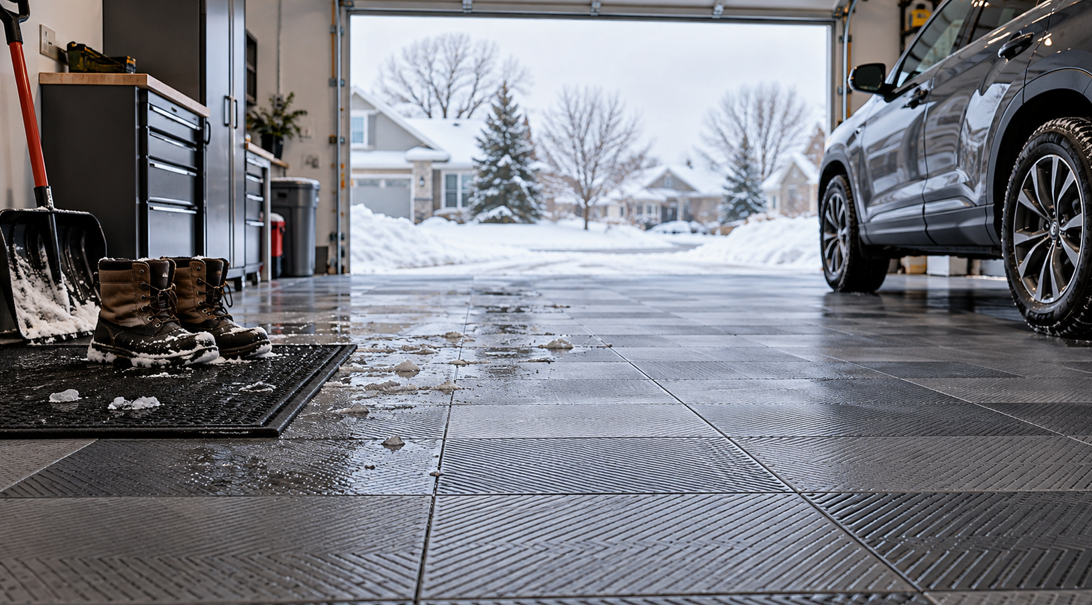
Nebraska winters can turn a garage floor into one of the most demanding surfaces in the home. Snow falls from vehicles, boots carry in slush and road salt, and melting ice can leave slick patches exactly where people are walking.
That makes flooring choice especially important in garages that double as entrances, workshops, storage areas, or everyday transition spaces between the driveway and the house.
Slip-resistant tile can help create a safer, more practical garage floor when it is selected for the environment and maintained properly. The right surface combines traction, durability, easy cleaning, and a look that still feels polished enough for a well-finished home.
With more than 30 years of flooring experience, Carpet Pros helps homeowners around Kearney and surrounding Nebraska communities explore flooring options suited to local homes and seasonal conditions.
Why Nebraska Winters Put Garage Floors to the Test
A garage may be protected from direct snowfall, but winter still follows you inside.
Vehicles carry packed snow around wheel wells and undercarriages. Boots bring in moisture, salt, sand, and mud. When temperatures fluctuate, snow melts onto the floor and may refreeze near colder sections of the garage.
That combination creates three major concerns.
Wet Surfaces Can Reduce Traction
A floor that feels perfectly secure when dry may become much more slippery when covered with melting snow or water.
This matters most in walking paths such as:
Around vehicle doors.
Between parked cars and the house entrance.
Near stairs.
Around storage areas.
Beside workbenches.
Near exterior garage doors.
Homeowners who frequently use the garage as their main entrance may walk across these areas several times each day.
Salt and Grit Increase Winter Mess
Road treatments and sand are useful outdoors, but they can quickly spread throughout the garage.
Fine grit can become embedded in dirt, while salty moisture can dry into visible residue.
A flooring surface that is straightforward to sweep, vacuum, and clean can make winter maintenance much more manageable.
Temperature Changes Add Another Consideration
Nebraska garages may experience much larger temperature fluctuations than interior rooms, particularly when they are unheated or only partially conditioned.
That is why homeowners need to consider more than appearance when selecting garage flooring. The tile, setting materials, subfloor conditions, and installation method all need to be appropriate for the intended environment.
What Makes Garage Tile Slip-Resistant?
"Slip-resistant" can sound like a simple product feature, but several factors influence how secure a tiled surface feels underfoot.
Surface Texture
Texture is one of the most noticeable differences between tile products.
Smooth, highly polished tile may look attractive, but a textured or matte surface can often provide better grip in spaces where moisture is expected.
For a winter garage, homeowners may want to explore surfaces with:
Fine texture.
Matte finishes.
Raised patterns.
Subtle surface variation.
Grip-focused finishes designed for wet areas.
The goal is not to choose the roughest-looking product available. It is to find a practical balance between traction, appearance, and ease of cleaning.
Tile Finish
Glossy finishes can reflect light beautifully, but garages generally benefit from a more functional approach.
A matte or lightly textured finish can provide a more suitable walking surface while still creating a clean, finished appearance.
Water and Debris Still Matter
No flooring surface is immune to slippery conditions.
Even a tile designed with traction in mind can become hazardous when covered with standing water, ice, loose sand, oil, or other debris.
Slip resistance works best as part of a broader winter strategy that includes prompt cleaning, good drainage, and sensible entry habits.
Look for Tile Designed for Demanding Areas
Garage flooring has different demands from tile installed in a decorative backsplash or low-traffic interior room.
Homeowners need to look at how a product is intended to perform, not simply whether they like the color or pattern.
Durability Matters
Garages may see:
Vehicle traffic.
Heavy storage.
Toolboxes.
Workbenches.
Bikes.
Lawn equipment.
Snow blowers.
Frequent foot traffic.
A tile used in this setting needs to be suitable for the expected level of use.
Moisture Exposure Matters Too
Winter brings regular contact with melting snow and slush.
That makes moisture suitability especially important when comparing tile products.
Homeowners can ask a flooring professional about the tile's intended application and whether the product is appropriate for the garage conditions in their specific home.
Think Beyond the Tile Itself
Successful garage flooring depends on the full installation system.
The subfloor, setting material, grout, transitions, expansion considerations, and existing floor condition can all influence long-term performance.
Professional assessment is especially valuable if the concrete slab has:
Existing cracks.
Uneven areas.
Previous coatings.
Moisture concerns.
Surface damage.
Choosing a beautiful tile is only one part of creating a reliable garage floor.
Choose a Surface That Balances Grip and Easy Cleaning
More texture can provide useful traction, but extremely aggressive surfaces may also trap dirt.
That means garage flooring needs a balance.
Consider How Much Texture You Really Need
For a garage that mainly functions as vehicle storage, a moderate texture may be sufficient.
A garage that serves as the family's primary entrance or contains a busy workshop may benefit from stronger traction.
Think about how people actually use the space rather than selecting tile based solely on appearance.
Look at the Cleaning Routine
Nebraska winter garages can collect plenty of:
Salt.
Sand.
Mud.
Gravel dust.
Melted snow.
Leaf debris.
A floor with deep grooves or highly irregular texture may require more effort to clean.
A practical garage tile should offer enough grip for the conditions while still allowing homeowners to sweep and wash away winter residue efficiently.
Test Samples When Possible
A small sample can reveal details that are hard to judge from a photograph.
Notice:
How rough the surface feels.
Whether dirt settles into the texture.
How the finish looks under garage lighting.
Whether the color hides everyday dust.
How comfortable the tile feels under normal footwear.
Homeowners considering an upgrade can explore available tile flooring styles and discuss which options may be suitable for the conditions and intended use of their garage.
Porcelain and Ceramic Tile: Understand the Application
Porcelain and ceramic are common tile categories, but not every tile within either category is designed for garage use.
The specific product matters more than simply choosing one label over another.
Porcelain Tile
Many homeowners consider porcelain because certain products offer dense construction, low water absorption, and strong durability.
These characteristics can make appropriately rated porcelain products worth exploring for demanding flooring applications.
However, the fact that a tile is porcelain does not automatically make it suitable for every garage.
Homeowners still need to confirm:
Intended use.
Surface traction.
Installation requirements.
Temperature suitability.
Expected traffic conditions.
Ceramic Tile
Ceramic tile includes a wide variety of products with different performance characteristics.
Some options may be intended primarily for indoor residential spaces, while others are designed for more demanding applications.
That is why homeowners shouldn't assume all ceramic tile will perform the same way in a Nebraska garage.
Product Specifications Matter
Instead of relying only on appearance or tile type, ask whether the specific product is recommended for the floor, environment, and level of use.
This is particularly important in spaces that may experience moisture and significant seasonal temperature changes.
Pay Attention to Grout and Tile Size
Tile itself gets most of the attention, but grout lines can influence both appearance and functionality.
More Grout Lines Can Add Texture
Smaller tiles naturally create more grout joints across the floor.
Those additional lines may add some surface variation underfoot, although overall traction still depends heavily on the tile finish and condition of the floor.
Larger Tiles Create a Cleaner Look
Large-format tile can make a garage feel more modern and streamlined because there are fewer visible grout lines.
However, large tiles also require an appropriately prepared, level substrate for a quality installation.
If the existing garage slab is uneven, preparation becomes particularly important.
Choose Grout With Maintenance in Mind
Winter residue often settles into grout joints.
Selecting an appropriate grout and maintaining it correctly can help keep the finished floor looking cleaner.
Color also matters.
Very light grout can show road grime more quickly, while a more forgiving tone may suit a working garage better.
The goal is to create a finished surface that looks intentional without requiring constant cosmetic maintenance.
Plan for Snow, Water, and Garage Drainage
Slip-resistant flooring works best when water is not allowed to sit across the surface unnecessarily.
Identify Where Snow Usually Melts
Think about where vehicles are parked after a snowfall.
Water may collect:
Around tires.
Beneath wheel wells.
Near the center of the vehicle.
Along common walking paths.
Understanding where moisture appears helps homeowners plan mat placement and cleaning routines.
Keep Drainage Paths Clear
If the garage has a drain, make sure winter debris does not prevent water from reaching it.
Salt, dirt, leaves, and grit can accumulate quickly during the season.
Garages without drains may require more active removal of melting snow and standing water.
Use Absorbent or Containment Mats Where Appropriate
Mats can help contain moisture in high-risk areas, particularly around entrances.
Vehicle containment mats may also reduce the amount of slush spreading across the rest of the floor.
Choose materials appropriate for the tile surface and keep mats clean so grit does not build up underneath them.
Reduce Winter Slip Risks Around Garage Entrances
The most important area may not be where the car sits. It may be the short walking path between the vehicle and the house.
People often carry groceries, bags, children, packages, or work equipment through this route.
Keep the Walking Path Clear
Avoid allowing storage bins, tools, cords, shoes, or seasonal equipment to narrow the main path.
A clean route provides more room to avoid wet patches.
Wipe Up Slush Promptly
Don't wait until the end of the day if a large amount of snow has melted onto the floor.
Removing excess water helps restore traction and prevents the mess from spreading.
Add a Quality Entry Mat
Place an absorbent mat close to the door leading into the house.
This gives people another opportunity to remove moisture from their footwear before stepping inside.
Improve Garage Lighting
Winter mornings and evenings can be dark.
Good lighting makes it easier to see wet areas, ice, tools, and obstacles on the floor.
This is a simple improvement that complements the flooring itself.
Keep Garage Tile Clean Throughout Winter
A slip-resistant surface still needs regular maintenance.
Loose grit and dirty water can change how the floor feels underfoot, while road salt can leave the garage looking untidy.
Sweep or Vacuum Loose Debris
Remove sand, grit, and dirt before washing the floor.
Otherwise, cleaning can simply move abrasive particles from one area to another.
Pay particular attention to:
The driver's side of vehicles.
Paths leading to the house.
The garage threshold.
Areas around boot storage.
Clean Salt Residue Regularly
Road salt may leave a pale or chalky film after moisture evaporates.
Follow the care recommendations for the specific tile and grout system when choosing cleaning products.
Avoid assuming that a harsh chemical is necessary simply because the garage is a utility space.
Don't Let Standing Water Become Normal
It is easy to accept puddles as part of winter.
However, removing standing water promptly can improve safety and keep the garage easier to use.
A floor squeegee, mop, or other suitable cleaning tool can make quick cleanup much easier.
Consider How the Garage Is Used Year-Round
Winter safety may be the reason for the flooring upgrade, but the garage needs to work during every season.
For Everyday Parking
Look for durability, easy cleaning, moisture suitability, and a finish that hides normal tire marks and dust reasonably well.
For Workshops
A garage used for hobbies or repair work may need flooring that works around:
Heavy equipment.
Dropped tools.
Workbenches.
Rolling storage.
Frequent movement.
Discuss the intended use before choosing a product.
For Home Gyms
Some homeowners use part of the garage for exercise.
Tile can create an attractive finished surface, but activity-specific mats may still be useful under fitness equipment and workout areas.
For Multipurpose Garages
If the garage serves as storage, a workshop, an entryway, and a vehicle area, prioritize overall practicality.
The ideal choice is usually the one that performs reliably across all of those daily uses rather than excelling in only one.
Common Mistakes to Avoid With Winter Garage Flooring
Good planning can prevent several common problems.
Choosing Tile for Looks Alone
A polished tile may photograph beautifully, but garage floors need performance as well as style.
Surface texture, intended use, moisture suitability, and durability deserve equal attention.
Assuming Slip-Resistant Means Slip-Proof
Water, ice, oil, sand, and other substances can make almost any flooring surface hazardous.
Good traction helps, but winter maintenance remains important.
Ignoring the Existing Concrete Slab
Installing new tile over a damaged or poorly prepared surface can create avoidable problems.
The slab needs to be assessed before installation.
Forgetting About the Entry Route
A garage can have beautiful flooring while the main walking path remains cluttered, dark, or regularly covered in melting snow.
Think about the entire route from the vehicle to the interior door.
Neglecting Winter Cleaning
Traction depends partly on keeping the surface free of loose debris and standing water.
Cleaning is part of winter safety, not merely appearance.
Create a Safer, More Practical Garage for Nebraska Winters
Garage flooring in Nebraska needs to do more than look good.
During winter, the surface may encounter snow, slush, salt, sand, wet boots, vehicle traffic, and frequent changes in temperature. Choosing tile with appropriate traction and performance characteristics can make the space easier and more comfortable to use throughout the colder months.
Start by considering how your family actually uses the garage. Look at the main walking routes, where snow usually melts, how frequently the floor gets wet, and whether the space functions as more than vehicle storage.
Then consider surface texture, ease of cleaning, product suitability, grout, drainage, lighting, and installation conditions together rather than treating them as separate decisions.
Carpet Pros helps homeowners in Kearney, Grand Island, Arnold, Lexington, Minden, and surrounding Nebraska communities explore beautiful, durable flooring solutions backed by knowledgeable service and decades of industry experience.
If you're considering new garage flooring and want help finding an option suited to your space, reach out to us to discuss your project.

