

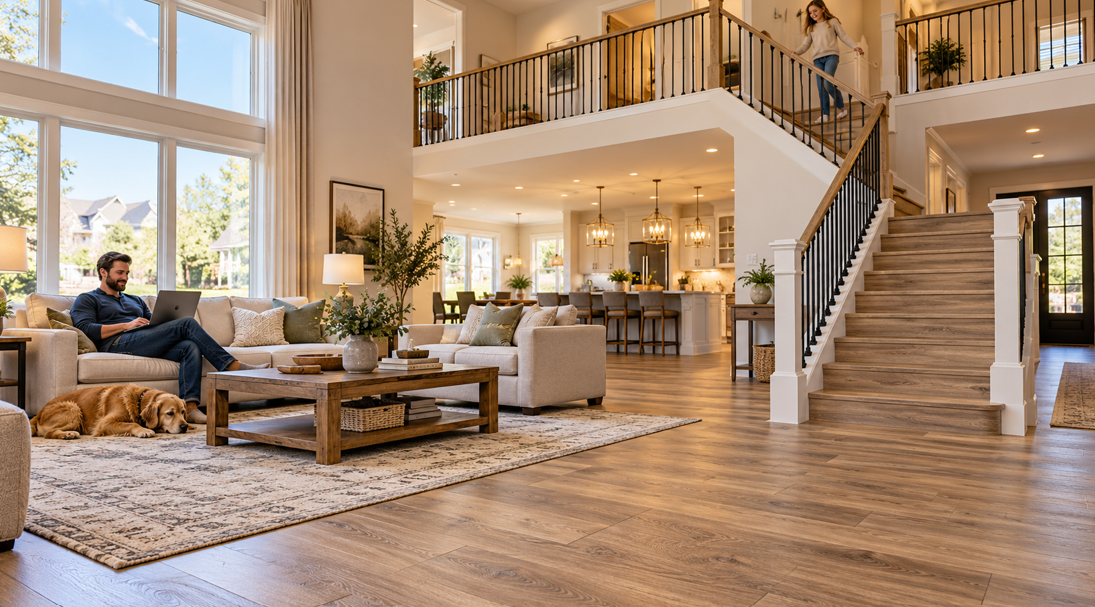
Living in a multi-story home comes with plenty of advantages, but noise between floors can quickly become frustrating. Footsteps upstairs, children running down a hallway, chairs moving across a room, and everyday activity can all travel through the structure and become more noticeable downstairs.
For homeowners in Lexington, Grand Island, and surrounding Nebraska communities, flooring choice can play an important role in how comfortable a multi-level home feels.
Laminate flooring is a popular option because it can deliver the look of wood, strong everyday durability, and a wide range of styles. When paired with the right underlayment and installed correctly, it can also help reduce some of the impact noise that moves through upper floors.
That doesn't mean laminate can make a home completely silent. Sound control depends on the flooring system, subfloor, underlayment, room layout, construction of the home, and the type of noise involved.
With more than 30 years of flooring experience, Carpet Pros helps Nebraska homeowners choose flooring based on how their homes are actually used, including busy multi-story households where comfort matters just as much as appearance.
Why Noise Feels Different in a Multi-Story Home
Noise in a single-level home usually stays within the same general area.
In a two-story or multi-level home, everyday movement can travel through the floor assembly and become much more noticeable below.
That is especially true when bedrooms, playrooms, offices, or family spaces are located directly above another frequently used room.
Impact Noise
Impact noise is created when something physically strikes or moves across the floor.
Common examples include:
Footsteps.
Children running.
Pet movement.
Chairs sliding.
Dropped objects.
Shoes with hard soles.
Furniture being moved.
This type of sound often travels through the flooring and structure itself.
For many homeowners, this is the noise they notice most when thinking about upper-level flooring.
Airborne Noise
Airborne noise travels through the air before passing through walls, ceilings, floors, doors, and other structural elements.
Examples include:
Conversations.
Television.
Music.
Gaming.
Phone calls.
Home office meetings.
Flooring can influence the way sound behaves in a room, but airborne noise is usually affected by much more than the floor alone.
That distinction matters because no flooring product should be presented as a complete soundproofing solution.
How Laminate Flooring Can Affect Sound
Laminate is a hard-surface flooring product, so its acoustic performance depends heavily on the entire flooring system rather than the visible plank alone.
Two laminate floors can look similar but behave differently underfoot if they use different underlayments, installation methods, plank constructions, or subfloors.
Hard Surfaces Reflect More Sound
Hard surfaces generally reflect more sound within a room than soft materials such as carpet.
That means footsteps or objects contacting the floor may sound sharper if the installation lacks adequate sound control.
This is why underlayment is so important in multi-level applications.
The Floor Assembly Matters
Think of the finished floor as one layer within a larger system.
The acoustic result can depend on:
Laminate plank construction.
Underlayment.
Subfloor material.
Subfloor condition.
Installation method.
Ceiling structure below.
Floor joists.
Room furnishings.
Focusing only on the laminate surface can miss several factors that influence how sound travels.
Underlayment Is One of the Most Important Sound-Control Factors
Underlayment sits between the laminate flooring and the subfloor.
Depending on the product, it can serve several purposes, including improving underfoot feel, supporting installation requirements, helping manage minor surface irregularities, and reducing certain types of sound.
For upstairs rooms, acoustic performance is often one of the main reasons homeowners pay closer attention to underlayment selection.
Look for Underlayment Designed for Acoustic Performance
Not every underlayment is built for the same purpose.
Some products focus primarily on basic cushioning, while others are specifically designed to improve sound performance.
When comparing products, homeowners can ask about:
Impact sound reduction.
Sound transmission performance.
Compatibility with the laminate.
Installation requirements.
Thickness.
Moisture considerations.
The best choice depends on the specific floor and home rather than simply choosing the thickest option available.
Thicker Does Not Automatically Mean Better
It is easy to assume that more cushioning always means less noise.
In reality, laminate flooring usually has specific underlayment requirements. Using a product that is too thick or too soft may affect how the locking system performs.
That is why underlayment should be selected according to flooring manufacturer guidance.
Some Laminate Includes Attached Padding
Certain laminate products are manufactured with attached underlayment.
That can simplify installation, but homeowners still need to understand the acoustic performance of the full system.
An attached pad does not automatically mean the floor will provide the sound reduction needed for every upstairs room.
Choose Laminate With Multi-Level Living in Mind
Laminate flooring comes in a wide range of constructions, finishes, thicknesses, and performance levels.
For an upstairs space, homeowners may want to think beyond color and plank style.
Consider Overall Construction
A more substantial flooring product may feel different underfoot than a lighter option, although overall sound performance still depends on the full system.
Rather than judging by thickness alone, consider:
Product construction.
Underlayment compatibility.
Installation method.
Intended residential use.
Manufacturer specifications.
Think About Room Function
The best flooring setup for a quiet guest bedroom may be different from one for a children's playroom.
Consider how much activity the room receives.
Bedrooms generally experience lighter movement.
Hallways often see repeated foot traffic.
Home offices may need reduced distraction during calls and meetings.
Playrooms can create frequent impact noise.
Matching the flooring system to the room's use can produce better results than applying the same solution everywhere.
Homeowners comparing options for upstairs rooms can explore available laminate flooring styles and discuss which combinations of flooring and underlayment may work best for their home's layout.
Focus on the Rooms Where Noise Matters Most
Not every upstairs room needs the same level of acoustic attention.
A strategic approach can make the flooring project more practical.
Upstairs Bedrooms
Bedrooms are often directly above living rooms, kitchens, or other bedrooms.
Reducing footstep noise can help make both levels feel calmer.
Consider quieter footwear habits, area rugs, and appropriate underlayment alongside the laminate itself.
Hallways
Second-floor hallways can create surprisingly noticeable noise because everyone uses them.
Footsteps may repeat throughout the day, especially in larger households.
A carefully chosen flooring and underlayment combination can help reduce the sharpness of that movement.
Children's Rooms and Playrooms
Children tend to generate more impact noise because they run, jump, move toys, and drop objects.
Laminate can still be a practical choice because of its durability, but sound management deserves extra attention in these rooms.
Area rugs can also provide additional softness in active zones.
Home Offices
A home office above a bedroom or family room creates a different challenge.
Office chairs, footsteps, and repeated movement around a desk can become noticeable below.
Protective chair mats, furniture pads, rugs, and acoustic underlayment can all contribute to a quieter setup.
Rugs Can Work With Laminate Instead of Against It
Homeowners sometimes assume that choosing laminate means giving up the sound-absorbing benefits of softer materials.
You can still use rugs strategically without covering the entire floor.
Use Rugs Where Noise Is Most Likely
Useful locations include:
Beside beds.
Under seating areas.
In play spaces.
Under desks.
Along long hallways.
Near stair landings.
These areas often experience repeated impact.
Add Rug Pads Where Appropriate
A compatible rug pad can add cushioning and help the rug stay in place.
Make sure the material is suitable for the laminate surface and follow flooring care recommendations.
Keep the Laminate Visible
The goal does not have to be covering every square foot.
A few well-placed rugs can add softness, comfort, and acoustic benefits while still allowing the laminate design to remain a major part of the room.
Furniture Placement Can Influence Everyday Noise
Flooring is not the only element that affects sound inside a room.
Furniture and soft furnishings can change how noise feels.
Soft Furnishings Help Reduce Echo
Rooms with very little furniture can sound louder because sound reflects from hard surfaces.
Adding items such as:
Curtains.
Upholstered seating.
Bedding.
Rugs.
Fabric-covered furniture.
can help soften the acoustic environment.
Use Furniture Pads
Chairs and tables can create repetitive scraping and tapping noises.
Furniture pads help reduce direct contact between furniture legs and the laminate surface.
They also help protect the floor itself.
Check pads periodically because worn pads may lose effectiveness or collect grit.
Think About Where Active Furniture Sits
If possible, avoid placing frequently moved furniture directly above especially quiet rooms.
For example, a rolling office chair positioned above a bedroom may be more noticeable than the same chair above a less sensitive area.
Floor planning can contribute to acoustic comfort just as much as material choice.
Installation Quality Matters for Sound Control
Even a good laminate product can perform poorly if the floor beneath it is uneven or the installation does not follow manufacturer requirements.
Start With a Properly Prepared Subfloor
Uneven areas can cause movement, flexing, or noise underfoot.
Before installation, the subfloor should be evaluated and prepared according to the flooring system's requirements.
That may include addressing:
Uneven sections.
Loose areas.
Damage.
Debris.
Existing flooring conditions.
Follow Expansion Requirements
Laminate typically needs appropriate expansion space around the room.
This allows the floor to respond to normal environmental changes.
Installation requirements vary, so the manufacturer's guidance should be followed rather than relying on a one-size-fits-all approach.
Avoid Shortcuts With Underlayment
If a flooring product requires a specific underlayment type or installation method, substituting something unrelated may affect both performance and warranty considerations.
Professional guidance can be especially valuable when sound control is one of the priorities of the project.
Don't Expect Flooring Alone to Solve Every Noise Problem
It is helpful to be realistic about what laminate and acoustic underlayment can achieve.
They may help reduce certain sounds, particularly impact noise, but they do not transform an ordinary floor assembly into a fully soundproof structure.
Building Construction Matters
Sound transmission can depend on:
Floor joists.
Ceiling construction.
Insulation.
Structural connections.
Open staircases.
Doorways.
Wall construction.
If a home has major noise problems, flooring may be only one part of the solution.
Identify the Type of Noise First
If footsteps are the main complaint, flooring and underlayment may deserve more attention.
If conversations and television are clearly audible through floors and walls, broader construction factors may be involved.
Understanding the problem prevents homeowners from expecting one product to solve something outside its intended purpose.
Create a Quieter Upstairs Routine
Small household habits can complement a thoughtfully selected laminate floor.
Encourage Softer Indoor Footwear
Hard-soled shoes create sharper impact than socks, slippers, or soft indoor shoes.
Changing footwear indoors can make a noticeable difference in busy upstairs areas.
Deal With Loose Furniture
A chair that rocks, a table with an uneven leg, or a bed frame that moves can create repetitive noise.
Check furniture periodically and tighten or stabilize loose pieces.
Keep Floors Free of Grit
Sand and debris under shoes can create extra scraping sounds while also contributing to wear.
Regular sweeping or vacuuming helps keep the surface cleaner and quieter.
Use Rugs in Active Zones
You do not need to carpet the whole room.
A rug beneath a play area or desk can target the exact location where repeated noise occurs.
What Lexington and Grand Island Homeowners Can Consider Before Buying
Before choosing laminate for an upstairs room, think through the project as a complete system.
Ask questions such as:
What room will the flooring be installed in?
What room is directly below it?
How much daily foot traffic does the space receive?
Are children or pets using the room?
Is impact noise already a concern?
What underlayment is compatible with the flooring?
Does the laminate include attached padding?
What subfloor is currently in place?
Are there uneven areas or existing noise issues?
Will rugs or other soft furnishings be added?
These questions help move the conversation beyond choosing a color sample.
A floor that looks beautiful and performs well acoustically can make a multi-story home feel more comfortable from one level to the next.
Common Mistakes to Avoid When Choosing Upstairs Laminate
Sound control is easier when homeowners avoid a few common assumptions.
Choosing Based Only on Appearance
Color, plank width, and wood-look detail are important, but upstairs flooring also needs to work with the way the room is used.
Buying the Thickest Underlayment Available
A thicker product is not automatically compatible with laminate.
Follow the flooring manufacturer's requirements.
Ignoring the Existing Subfloor
A poorly prepared subfloor can affect the way the finished floor feels and sounds.
Expecting Complete Soundproofing
Acoustic underlayment can help with noise reduction, but structural sound transmission may require other solutions.
Forgetting About the Room Below
The same upstairs activity feels very different depending on what sits beneath it.
A playroom over a garage creates a different situation from a playroom over a bedroom.
Think vertically, not just room by room.
Build a More Comfortable Multi-Story Home
A quieter home does not depend on one flooring feature.
For homeowners in Lexington, Grand Island, and surrounding Nebraska communities, the best results come from looking at laminate flooring as part of a complete acoustic system.
The laminate itself matters, but so do underlayment, subfloor preparation, installation quality, room use, rugs, furniture, and everyday household habits.
Start by identifying where noise is most noticeable. Determine whether footsteps and other impact sounds are the main issue, then compare flooring systems that are appropriate for the room and compatible with acoustic underlayment.
Carpet Pros helps homeowners throughout Kearney, Grand Island, Arnold, Lexington, Minden, and nearby communities explore flooring solutions that combine durability, style, and practical performance for the way their homes are used.
If you're planning new flooring for an upstairs room and want help choosing an option that fits your household, we are here to help you explore the right solution.

