

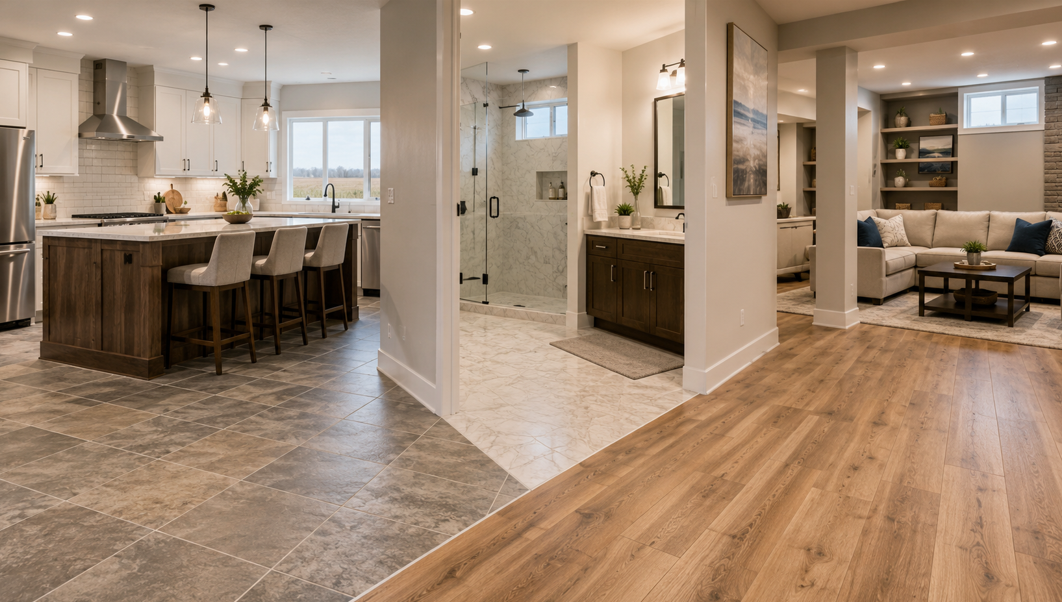
Choosing the Right Floor for the Rooms That Work the Hardest
Kitchens, bathrooms, and basements ask a lot from flooring. These are the rooms where spills happen, moisture shows up, foot traffic builds, and Nebraska’s changing seasons can make a difference. In Kearney, Grand Island, Arnold, Lexington, and Minden, homeowners also deal with winter snow, spring mud, summer humidity, and dry indoor air once the heat kicks on.
That is why the tile versus laminate question matters. Both flooring options can look beautiful, both can offer strong everyday value, and both can help transform a room. But they do not perform the same way in every space.
Tile is known for moisture resistance, durability, and a clean, polished look. Laminate is loved for its realistic wood-look style, comfort underfoot, and practical value. Choosing between them depends on the room, the household, the budget, and how much moisture the floor will face.
At Carpet Pros, homeowners across central Nebraska can compare flooring options with guidance from a family-owned team that understands local homes, seasonal wear, and everyday living. The right floor should not just look good in a showroom. It should work in the room where it is going to be installed.
This guide compares tile and laminate for kitchens, bathrooms, and basements so you can make a confident, room-by-room flooring decision.
Tile and Laminate at a Glance
Before comparing these rooms, it helps to understand what each flooring type does best.
Tile is a hard-surface flooring option often made from materials like porcelain or ceramic. It is popular in moisture-prone rooms because it handles water well when installed properly. Tile can also bring a premium look to kitchens, bathrooms, laundry rooms, entryways, and basements.
Laminate is a layered flooring product designed to create the look of wood, stone, or other natural materials. It usually has a wear layer on top, a design layer underneath, a core, and a backing layer. Many modern laminate products offer impressive realism, scratch resistance, and water-resistant features.
Where Tile Usually Stands Out
Tile is often a strong fit when moisture is the top concern. It can work beautifully in bathrooms, kitchens, basements, mudrooms, and laundry areas when the right product and installation method are used.
Tile also offers excellent design range. Homeowners can choose wood-look tile, stone-look tile, patterned tile, large format tile, or simple neutral designs that feel clean and timeless.
Where Laminate Usually Stands Out
Laminate is often appealing when homeowners want a warm, stylish floor that offers the look of hardwood with easier everyday maintenance. It can be comfortable in living areas, bedrooms, hallways, kitchens, and finished basements when the product is suitable for the space.
Laminate can also be a practical choice for families who want an updated look without choosing a floor that feels overly formal or delicate.
Kitchen Flooring: Tile vs Laminate
The kitchen is one of the busiest rooms in the home. It handles food spills, dropped utensils, chair movement, cooking traffic, pet bowls, and family routines. In Nebraska, kitchens also see extra winter activity when people come inside with snowy boots or gather indoors during colder months.
Both tile and laminate can work in kitchens, but the best choice depends on how the space is used.
Why Tile Works Well in Kitchens
Tile is a dependable kitchen flooring option because it handles moisture and messes well. Spills from the sink, dishwasher, refrigerator, or cooking area can be cleaned up without the same concerns homeowners may have with some wood-based floors.
Porcelain tile is especially popular for kitchens because it is dense, durable, and available in a wide range of looks. It can mimic natural stone, concrete, marble, slate, or hardwood. This gives homeowners a lot of design freedom.
Tile is also helpful in homes where the kitchen connects to an entryway, mudroom, or dining area. If wet shoes, muddy paws, or heavy traffic are common, tile can offer a strong surface that feels ready for everyday use.
Where Laminate Makes Sense in Kitchens
Laminate can also be a strong kitchen choice, especially when homeowners want warmth, wood-look style, and a comfortable feel underfoot. Modern water-resistant laminate products can handle everyday kitchen activity better than older laminate floors.
Laminate may be a good fit for kitchens where spills are cleaned promptly, the room is not exposed to standing water, and the homeowner wants a softer visual look than tile. It can make an open-concept kitchen feel connected to nearby living or dining areas.
Kitchen Verdict
Choose tile for kitchens where moisture resistance, long-term durability, and easy cleanup are the top priorities. Choose laminate if you want a warmer wood-look design, comfort underfoot, and a value-focused surface for everyday family use.
For many Nebraska kitchens, tile is the safer choice when water exposure is frequent. Laminate works best when the product is water-resistant and the household is consistent with cleanup.
Bathroom Flooring: Tile vs Laminate
Bathrooms are the room where moisture matters most. Showers, tubs, sinks, toilets, humidity, wet towels, and daily routines all create conditions that flooring needs to handle well.
This is where tile often has a clear advantage.
Why Tile Is Usually Best for Bathrooms
Tile is one of the most trusted bathroom flooring choices because it is designed for moisture-heavy spaces. Porcelain and ceramic tile can perform very well in bathrooms when installed correctly with the right setting materials, grout, and waterproofing approach.
Tile also gives bathrooms a clean, finished look. Homeowners can choose classic neutrals, modern large format styles, stone looks, marble-inspired designs, or patterned tile for added personality.
For Nebraska homes, tile can be especially useful in bathrooms that deal with cold mornings, wet floors, and high daily use. It can also pair well with radiant heating, which makes the bathroom floor feel warmer during winter.
Can Laminate Work in Bathrooms?
Laminate can be used in some bathroom settings, but it requires more caution. Standard laminate is not usually the best fit for full bathrooms because water can reach seams, edges, or damaged areas. Even water-resistant laminate has limits.
In a powder room with no shower or tub, laminate may be more realistic. These spaces usually have less moisture than full bathrooms. A half bath with careful cleaning habits and a suitable product may be a possible location for laminate.
Still, for bathrooms with showers or tubs, homeowners need to think carefully. Frequent moisture exposure can create long-term concerns if the floor is not designed for that environment.
Bathroom Verdict
Tile is usually the stronger choice for full bathrooms, especially those with showers, tubs, or heavy moisture. Laminate may be considered for powder rooms or low-moisture bathrooms if the product is suitable and installed carefully.
If the room regularly gets wet, tile is generally the more dependable option.
Basement Flooring: Tile vs Laminate
Basements are a little more complex. They can be comfortable family spaces, guest rooms, home offices, playrooms, or entertainment areas. But they can also be cooler, more humid, and more moisture-prone than rooms above grade.
In Nebraska homes, basements often feel cold in winter and may deal with moisture concerns during spring or heavy rain. That makes flooring selection important.
Why Tile Can Work Well in Basements
Tile is a strong basement option because it handles moisture better than many other flooring materials. If the basement is properly prepared and the subfloor is suitable, tile can create a durable, long-lasting surface.
Tile is especially useful in basements that include laundry areas, storage zones, bathrooms, or walk-out entrances. These spaces may see more moisture, so tile offers practical protection.
The main drawback is comfort. Tile can feel cold underfoot, especially in a Nebraska basement during winter. Area rugs and radiant heating can help make the space feel more inviting.
Why Laminate Appeals in Finished Basements
Laminate is popular in finished basements because it brings warmth and wood-look style. It can make a lower-level space feel more like the rest of the home instead of a utility area.
A finished basement with laminate can feel comfortable, stylish, and family-friendly. It can work well for home theaters, playrooms, offices, and guest spaces when moisture conditions are controlled.
Water-resistant laminate may be a helpful option, but the basement should be evaluated first. If the basement has moisture issues, water intrusion, or an uneven concrete subfloor, those concerns need to be addressed before laminate is installed.
Basement Verdict
Choose tile for basements where moisture resistance is the top priority. Choose laminate for finished basements where comfort, warmth, and wood-look style matter, but only when the basement is dry, stable, and suitable for laminate installation.
For Nebraska basements, the right answer depends heavily on moisture conditions.
Moisture Resistance: Which Floor Handles Water Better?
Moisture is one of the biggest differences between tile and laminate. In kitchens, bathrooms, and basements, this comparison can shape the entire flooring decision.
Tile generally performs better in wet environments. Porcelain and ceramic tile are commonly used in areas where water exposure is expected. When paired with proper installation, grout, and waterproofing details, tile can provide dependable moisture performance.
Laminate has improved a lot over the years. Many modern products offer water-resistant or even waterproof features. However, laminate still needs proper care. Spills should be cleaned quickly, and standing water should not be ignored.
For homeowners comparing tile flooring with laminate, the main question is not just “Will water ever touch the floor?” It is “How often will water touch the floor, and how quickly will it be cleaned?”
Best for Frequent Moisture
Tile is usually the better choice for rooms with frequent water exposure, such as full bathrooms, laundry areas, and basements with moisture concerns.
Best for Occasional Spills
Laminate can work well in rooms where spills are occasional and cleaned promptly, such as kitchens, dining areas, powder rooms, or dry finished basements.
Best for Peace of Mind
If moisture is your biggest concern, tile usually offers stronger peace of mind. If comfort and wood-look style are equally important, a water-resistant laminate may still be worth considering in the right room.
Durability and Everyday Wear
Both tile and laminate can be durable, but they handle wear in different ways.
Tile is hard, solid, and resistant to many types of everyday damage. It handles heavy foot traffic well and is not easily affected by normal spills. Porcelain tile is especially durable and can be a strong choice for active households.
However, tile can chip or crack if a very heavy object is dropped or if the subfloor beneath it is not properly prepared. Grout lines also need attention over time.
Laminate is designed to resist everyday surface wear. Many products handle scratches, scuffs, and foot traffic well, especially those with stronger wear layers. Laminate can be a good choice for homes with kids, pets, and busy routines.
The main concern with laminate is moisture and edge exposure. If water reaches seams or sits too long, it may affect the floor depending on the product.
Best for Heavy Traffic
Both can work, but tile has an edge in high-moisture, high-traffic spaces. Laminate is strong in dry, active areas where homeowners want comfort and style.
Best for Pets
Tile is easy to clean and handles pet messes well. Laminate can also work for pets when it has scratch-resistant and water-resistant features.
Best for Long-Term Toughness
Tile often has the advantage for long-term durability in kitchens, bathrooms, and basements, especially when moisture is part of the equation.
Comfort Underfoot
Comfort matters more than homeowners sometimes expect. A floor may look beautiful, but if it feels cold or hard every day, the room may not feel as welcoming.
Tile is firm and cool underfoot. That can be refreshing in summer but less appealing in winter. In Nebraska homes, tile can feel cold in bathrooms, kitchens, and basements during the colder months.
Radiant heat can help make tile much more comfortable. It is especially popular in bathrooms and basements where cold floors are a common concern.
Laminate usually feels warmer and slightly softer than tile. It can be more comfortable for standing, walking, and everyday family use. Underlayment can also improve the feel of laminate and help with sound control.
Best for Warmth
Laminate usually feels warmer without added heating.
Best With Radiant Heat
Tile works very well with radiant heating because it transfers heat effectively. Laminate may also work with radiant heat if the product is approved for that use.
Best for Long Standing
Laminate may feel more comfortable in kitchens where people stand for longer periods while cooking or cleaning.
Style and Design Options
Tile and laminate both offer strong design potential. The right choice depends on the look you want and the room’s function.
Tile can create many styles. Large format tile can make a room feel modern and open. Stone-look tile adds natural texture. Marble-look tile brings a polished feel. Patterned tile can create a standout bathroom or laundry room. Wood-look tile offers the warmth of wood with stronger moisture performance.
Laminate is especially strong for wood-look designs. It can mimic oak, hickory, maple, walnut, weathered wood, and rustic planks. It works well when homeowners want visual warmth and a consistent look across connected rooms.
Best for Bathrooms
Tile usually offers more design flexibility and better moisture performance for bathrooms.
Best for Open-Concept Spaces
Laminate can help create smooth visual flow from kitchens into living areas. Wood-look tile can also do this with stronger moisture resistance.
Best for a Premium Look
Both can look premium. Tile often feels more permanent and polished. Laminate can look beautiful and inviting when the design layer is realistic and the color is well chosen.
Maintenance and Cleaning
Flooring should fit the way people actually live. A beautiful floor that feels hard to maintain may not be the right choice for a busy household.
Tile is generally easy to clean. Sweeping, vacuuming, and damp mopping with suitable products can keep it looking fresh. Grout lines may need extra attention, especially in kitchens and bathrooms.
Laminate is also easy to maintain with regular sweeping, vacuuming, and approved cleaners. The key is to avoid too much water. Wet mopping or letting spills sit can create concerns, even with water-resistant products.
Tile Maintenance Tips
Sweep or vacuum regularly.
Clean spills promptly.
Use a suitable tile cleaner.
Keep grout lines clean.
Address cracked grout early.
Laminate Maintenance Tips
Sweep or vacuum often.
Clean spills quickly.
Use manufacturer-approved cleaning products.
Avoid soaking the floor.
Use mats near exterior doors.
Add felt pads under furniture.
For Nebraska homes, entry mats are helpful no matter which flooring type you choose. Snow, grit, and mud can wear on any surface over time.
Room-by-Room Recommendation
Choosing between tile and laminate becomes easier when you look at each room separately.
Kitchens
Tile is a great choice for kitchens with frequent spills, heavy traffic, pets, or direct access to outdoor areas. Laminate is a strong choice for kitchens where homeowners want warmth, wood-look style, and comfort underfoot.
Best overall for moisture-heavy kitchens: tile.
Best for warm open-concept style: laminate or wood-look tile.
Full Bathrooms
Tile is usually the best choice for full bathrooms. It handles moisture better and offers strong design flexibility.
Best overall for full bathrooms: tile.
Powder Rooms
Laminate may work in powder rooms because moisture exposure is usually lower. Tile is still the safer option if homeowners want maximum moisture confidence.
Best for design flexibility and water protection: tile.
Best for matching nearby floors: laminate.
Finished Basements
Tile is a strong option for basements with moisture concerns. Laminate can work beautifully in dry, finished basements where comfort and style matter.
Best for moisture-prone basements: tile.
Best for dry family basements: laminate.
Laundry Areas
Tile is usually the better option because laundry areas can experience leaks, spills, and humidity.
Best overall for laundry areas: tile.
Cost and Value Considerations
Budget matters, but the lowest upfront price is not always the best long-term value. Homeowners should look at product quality, installation requirements, maintenance needs, and how long the floor is expected to perform.
Laminate can often be a value-focused option for homeowners who want a stylish floor with wood-look appeal. It may be especially attractive for large areas where the project budget needs to stretch.
Tile can require more installation preparation, but it may offer strong long-term value in moisture-prone rooms. A well-installed tile floor can handle years of use in kitchens, bathrooms, and basements.
Think Beyond the Product Price
When comparing tile and laminate, consider:
Room moisture levels
Subfloor condition
Installation needs
Household traffic
Cleaning habits
Long-term durability
Design goals
Comfort expectations
A floor that costs less upfront may not be the better choice if it struggles in the room. A floor that costs more upfront may be worth it if it performs better over time.
Questions to Ask Before Choosing
Before deciding between tile and laminate, homeowners should ask a few practical questions.
Is this room likely to get wet often?
Will the floor be exposed to snow, mud, or wet shoes?
Is the room above grade or below grade?
Does the basement have any moisture concerns?
Do pets or children use this space daily?
Is comfort underfoot a major priority?
Do I want the look of wood, stone, or a patterned design?
How much cleaning and maintenance feels realistic?
Will this flooring connect visually to nearby rooms?
Am I planning to stay in the home long term?
These questions help match the flooring choice to the way the room is actually used. That is where the best decisions happen.
Make the Right Flooring Choice for Each Room
Tile and laminate both have a place in Nebraska homes. The right choice depends on the room.
For full bathrooms, laundry areas, and moisture-prone basements, tile is usually the stronger option. It offers dependable moisture resistance, long-term durability, and excellent design flexibility.
For kitchens, dry finished basements, open-concept spaces, and rooms where warmth underfoot matters, laminate can be a beautiful and practical choice. It offers realistic wood-look style, comfort, and everyday value.
In many homes, the best answer may be a mix of both. Tile may belong in the bathroom and laundry room, while laminate works beautifully in the kitchen, basement family room, or connected living areas. The goal is not to choose one material for every space. The goal is to choose the right material for each room.
Carpet Pros helps homeowners in Kearney, Grand Island, Arnold, Lexington, Minden, and nearby communities compare durable, stylish, and practical flooring options with confidence. If you are planning a kitchen, bathroom, or basement update and want help choosing between tile and laminate, reach out to us for friendly local guidance.

